I just presented at a marketing analytics conference in Atlanta on the topic of marketing growth tactics that can be applied to businesses across any stage of the category life cycle (introduction, growth, maturity and decline). Matching the marketing approach to the category life cycle can yield great improvements. What surprised me was the interest in the specific topic of pricing.
Pricing, as a topic, is often the “ugly stepchild” of marketing. First, it seems relegated to a financially complicated spreadsheet exercise forced upon us by our CFO, and second, it doesn’t have much in the way of “fun” factor for marketers. Add to this, most discussions that involve changing prices are loaded with emotional drama and skepticism, with customers or businesses someone feeling cheated. Pricing’s impact to the profitability of a business, (both customers and suppliers), however, generally overshadows that of the other marketing tools. Therefore, I think it is the place all marketing discussions should start.
Pricing comes down to a basic choice: set the price of a product or service lower to gain more sales (while sacrificing some profitability on each individual transaction) or price higher to improve the profitability of each item (while hoping not to lose too many transactions).
To give you an idea of the impact of pricing, think about this financial puzzle: would it be better to pick up a whopping 20% more sales units by discounting only 5%, or would it be better to raise prices by a mere 3% (assuming no loss in sales)? Hmm. It seems like 20% sales growth would be a very nice growth number and would allow a marketer to claim victory (especially in a recession).
From a profitability standpoint, both yield about the same result. In fact the 3% price increase grows profit margin percentage by several points while the sales growth actually decreased margin. Both pricing and sales growth yielded 14% profit growth. *
That’s a fun return.
*Amount of increases vary, based on starting profitability assumption. I used a 45% Gross Profit and 22% Net Profit to start.


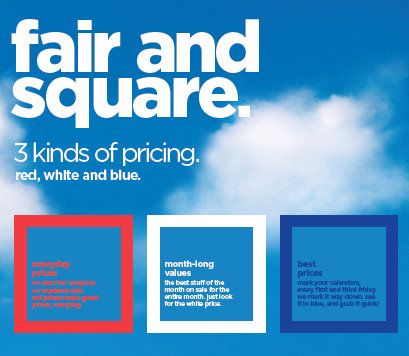 JC Penney moved away from a deep discounting strategy to an everyday low price strategy in January 2012. Revenues for its 1st quarter were down 20%, while its competitors have been stable. Consumers did not understand or see the benefit of the move. Here are some pricing strategy lessons to learn from this failure: