Showing posts with label marketing strategy. Show all posts

Wednesday, October 24, 2012

Keurig Shows How to Win in a Mature Market

K-Cup Single Cup BrewerHow do you enter a mature market that has huge global competitors and carve out a unique and competitive positioning?

Ask Keurig – the maker of the now famous K-Cup coffee pods. While the coffee market was focusing on Starbucks fighting Dunkin Donuts, McDonald’s or the latest upstart coffee shop, the Keurig company quietly built a brand that satisfied a real unmet need.

Sunday, August 26, 2012

“Marketing Strategy” Needs a New Name

Questons And Strategy SolutionsA good friend of mine who successfully coaches small business owners gave me a sage piece of advice: “Bob, if you are looking to attract small business owners as clients, the moment you use the words “marketing strategy”, small business owners become confused.”  As I pride myself on helping companies get their marketing on the right track, I confess that I use the terms frequently – and have seen that look of confusion.   

Wednesday, June 27, 2012

Lessons From JC Penney’s Pricing Strategy

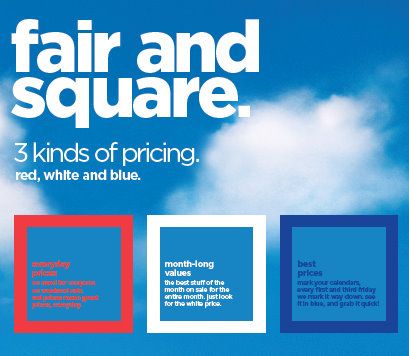
fair and square pricingJC Penney moved away from a deep discounting strategy to an everyday low price strategy in January 2012. Revenues for its 1st quarter were down 20%, while its competitors have been stable. Consumers did not understand or see the benefit of the move. Here are some pricing strategy lessons to learn from this failure:

  1. Perception of price, good or bad, relies on understanding the consumer benefit pricing brings, the problem it solves and its importance to the purchase decision.
  2. Pricing is relative to the nearest competitor.
  3. “Everyday low pricing” work best when the consumers believes they are getting the best deal (or the lowest price) rather than just a fair price.

Tuesday, June 19, 2012

Carhartt – Smart Marketing in a Mature Category

image
Carhartt is a brand that has enjoyed a lot of success in the last several years, largely due to some smart brand positioning and activation. Rugged outdoor working apparel is a crowded category and certainly not in a strong growth mode. But Carhartt teaches an important lesson in leveraging consumer insight into a larger demographic group.

Monday, February 27, 2012

Seeking Input on a New Diagnostic Tool

Fotolia_25783435_XS

I am writing a whitepaper (or an eBook, I’m not really sure what you call them these days) and it is coming along quite well.  It will be a tool to provide a quick, concise diagnostic on where a company (consumer driven manufacturing, but could also be B2B) will need to focus to accomplish their long-term objectives and how far that is from their current position. 

A company owner or division head must complete the following step-by-step approach into in order to complete the assessment:

  1. Determine five-year goals on critical metrics (sales, profit and market share).
  2. Rate the relative importance of success of several key diagnostics (the book outlines them) in order to reach the goal.
  3. Rate the company strength in eight (mostly) marketing and demand generating areas.
  4. The tool will then provide feedback on the necessary level of focus in each area in order to accomplish goals.

The end result looks something like the visual below. 

Monday, February 6, 2012

The Changing Role of Marketing

Business CommerceThe role of marketing is changing with marketers challenged to deliver on three new responsibilities:  

  1. Develop communication strategies to build consumer relationships and communities rather than one-way messages. 
  2. Develop tracking metrics to relationships, and uncover insights from a mass of raw data now available.  
  3. Understand the commercial profit and growth drivers of all aspects of the business, with stronger accountability to gain business results. 

These changes are separating the traditional marketing role into two roles - the business general manager, and the consumer relationship manager.  The speed at which these changes are taking place has marketers feeling unprepared in both areas. Traditional marketers lack the new media measurement skills and are also less familiar with the  commercial (non-marketing) drivers of the P&L.

Tuesday, January 31, 2012

Social Media – The 5 Questions to Ask Before Jumping In


social mediaSocial media’s development as a marketing tool for business has fundamentally changed the way businesses communicate with their consumers and customers. The pace of this change and the choices of tools and measurements are surprising most marketers. 

Most businesses have jumped into social media to some extent with very mixed results. The challenge they find is that building communities and fostering open dialogue takes a major commitment of time with few visible results. While it is much less expensive (in many cases free) for a business to post online, it can be a waste of time if not considered correctly.

Before beginning any social media marketing, it is important to answer the following five questions:

Monday, November 21, 2011

There are Four ‘P’s in Marketing – Not One

I attended a great social media convention in Philadelphia recently. The speakers were fantastic. I left feeling well educated but a bit odd about the continuing direction of the marketing profession. In all the exciting discussions regarding social media and digital communication, I sense the practice of marketing is moving from a strategic company driver to a more narrow role at a lower level in the organization. I realize that statement might not sit well with everyone. clip_image002

Marketing is generally defined as the process of providing goods and services to consumers that are designed to solve needs in a profitable way. Certainly, communication is a big part of marketing. There are an accepted mix of core elements in marketing called - the “4-P”s. These are the Products that meet a need, Pricing at which consumers are willing to pay, Placement of these products and services, and Promotion which is the communication of the product or service to the consumer.

The tactical exercise of moving communication from traditional one-way media to social conversations (which is necessary, by the way) has overshadowed the many other skills needed to be an effective marketer -- strategy, product development, pricing, channel expansions, etc. which are all needed to drive profitability and growth.

Marketers sometimes get angered at how senior managers don’t “get it” regarding social media and just want to measure ROI, etc. But the real issue is one of perspective and a bigger picture - a picture that the total discipline of marketing brings to the table. Let’s not lose sight of the bigger picture. Marketing needs a full picture to maintain its place at the executive table, where profit decisions get made.